
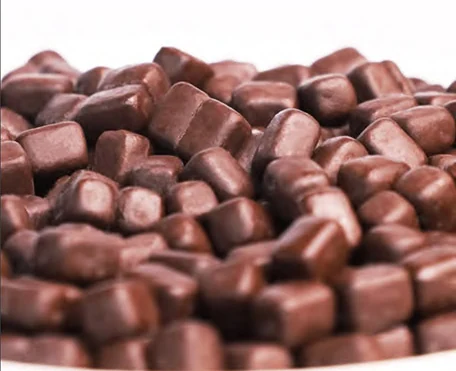
Chocolate inclusion selection matrix
| Format | Typical application | Primary risks to test | Evidence to retain |
|---|---|---|---|
| Chips or small drops | Cookies, cereal bars, ice cream and even distribution | Melt spread, breakage, piece count and feeder handling | Size distribution, loading, mixing loss and visible piece count |
| Chunks | Visible inclusions for cookies, frozen desserts, bars and snacking | Size consistency, fines, mixing damage and texture at serving | Dimensions, passing-size range, distribution and finished-piece integrity |
| Bake-stable pieces | Cookies, breads and bakery products with heat exposure | Shape loss, surface appearance, color and texture after cooling | Dough temperature, bake profile, retained shape and finished sensory result |
| Chocolate paste | Fillings, depositing, sauces and selected variegated systems | Flow change, blocking, separation and texture after storage | Temperature, test method, pumping or depositing performance and retained samples |
Application questions to settle before sampling
| Application | Questions to answer | Start here |
|---|---|---|
| Cookies and bakery | How long is the dough held, what is the bake profile and how much shape change is acceptable? | Bakery application guide |
| Ice cream and frozen desserts | How does the feeder handle the piece, and how hard or visible should it be at serving temperature? | Ice cream inclusion guide |
| Cereal and protein bars | Can the inclusion survive mixing, forming and cutting without changing the intended bite? | Bar application guide |
| Confectionery | What piece size, color, distribution and processing temperature define the approved appearance? | Confectionery guide |
Build a measurable inclusion specification
“Chocolate chunks” alone is not a production specification. The approved document should identify the chocolate system, piece dimensions or screen range, acceptable fines and broken pieces, color or flavor reference, foreign-body controls, packing and release requirements where relevant.
- Product identity, chocolate system and ingredient declarations
- Piece size, shape and an agreed measurement method
- Expected loading, distribution and visible count in the finished item
- Process temperatures, humidity and time exposure
- Finished shape, texture, flavor and appearance criteria
- Packing, storage conditions, shelf life and retained reference sample
- Batch release documents and change-notification route
Use the chocolate inclusions specification guide to turn those requirements into an approval checklist. For frozen applications, continue with the ice cream inclusion guide; for bakery trials, use the bake-stable buying guide.
How to run a useful inclusion sample trial
- Define the current product, reference sample and measurable acceptance criteria.
- Record the ingredient lot, piece format and condition before processing.
- Run the trial with representative loading, mixing, temperature and line settings.
- Evaluate the finished product after cooling, freezing, cutting or the relevant storage interval.
- Retain samples and photos, record deviations and agree the specification before scale-up.
Why Tissin Food
Tissin Food is the international brand of Hangzhou Tianshun Food Co., Ltd., founded in 1993, with published manufacturing locations in China, Indonesia and Thailand. The product portfolio includes chocolate chunks, buttons, paste, slabs, bake-stable chocolate, powder and compound coatings for bakery, frozen dessert, bar, beverage and confectionery projects.
Projects begin with the application, process and volume. The team can discuss a starting sample, custom piece direction and the evidence required before commercial approval. See the company profile, manufacturing and application capabilities and certification evidence status.
Frequently asked questions
What are chocolate inclusions?
Chocolate inclusions are chocolate pieces or flowable chocolate systems added to a food product for visible identity, texture, flavor contrast or filling performance. Common formats include chips, drops, chunks and bake-stable pieces, while chocolate paste can support selected filling and variegate applications.
Which chocolate inclusions work best for cookies and bakery?
Bake-stable chips or pieces are a starting point when the inclusion must resist melting or shape loss. The exact format should be tested in the intended dough, bake profile and cooling process, then assessed for shape, distribution, texture and finished appearance.
What is the difference between chocolate chips and chunks?
Chips and drops usually target more uniform distribution and controlled piece count, while chunks create a larger, more visible chocolate bite. Piece dimensions, loading, mixing tolerance and the finished-product target should drive the selection.
How should ice cream chocolate inclusions be tested?
Test the piece with the actual feeder, freezing and hardening process, then evaluate distribution, hardness, flavor release, visual impact and texture at the intended serving temperature.
Can chocolate inclusion size and shape be customized?
Project-specific piece sizes, shapes and chocolate systems can be discussed subject to the application, manufacturing capability, minimum volume and an approved sample.
Select a chocolate inclusion sample around your line.
Send the application, piece target, mixer or feeder, temperature conditions, first order and annual volume.
Request an inclusion review →